
Safe and Toxic Foods for Dogs: A Complete Guide for Responsible Pet Owners | Dogs are beloved companions that rely on their owners to provide proper nutrition and a safe environment. While many people enjoy sharing food with their pets, not all human foods are suitable for canine consumption. Some foods provide valuable nutrients and health benefits, while others can cause digestive issues, severe illness, or even life-threatening poisoning.
Understanding safe and toxic foods for dogs is one of the most important responsibilities of every dog owner. A lack of awareness can result in accidental poisoning, emergency veterinary visits, and long-term health complications. On the other hand, knowing which foods are safe can help owners provide healthy treats and nutritional variety while supporting their dog's overall well-being.
This comprehensive guide explains safe and toxic foods for dogs, common symptoms of food poisoning, and practical tips to keep your pet healthy and protected.
Table of Contents
Safe and Toxic Foods for Dogs: A Complete Guide for Responsible Pet Owners
Why It Is Important to Know Safe and Toxic Foods for Dogs
Dogs have a different digestive system and metabolism compared to humans. Certain substances that are harmless to people can be extremely dangerous to dogs because their bodies process chemicals differently.
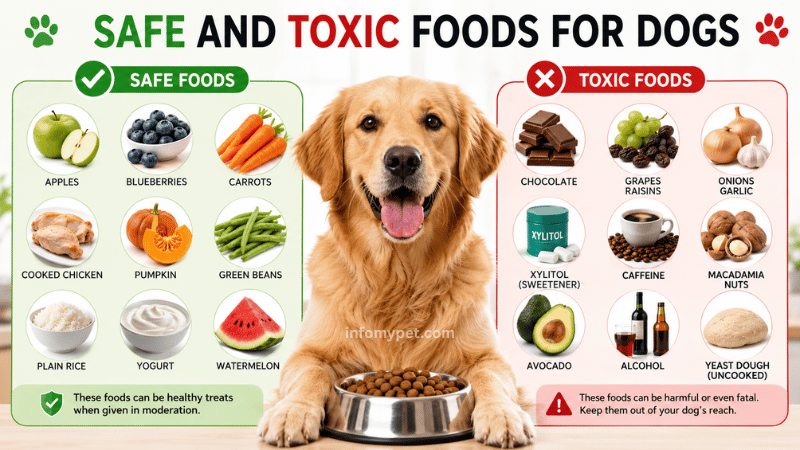
Many dog owners assume that if a food is healthy for humans, it must also be healthy for dogs. Unfortunately, this assumption can be dangerous. Foods such as grapes, chocolate, onions, and xylitol-containing products can cause severe reactions even when consumed in relatively small amounts.
By learning about safe and toxic foods for dogs, owners can make informed decisions about feeding practices, prevent accidental poisoning, and ensure their pets receive proper nutrition throughout their lives.
Understanding How Dogs React to Food
The effects of food on dogs depend on several factors, including:
- Age
- Body weight
- Breed
- Overall health condition
- Quantity consumed
- Frequency of consumption
Some dogs may experience mild digestive discomfort after eating inappropriate foods, while others may suffer serious organ damage or neurological complications. Because every dog responds differently, it is always safest to avoid feeding foods known to be harmful.
Safe Foods for Dogs
Many human foods can be safely offered to dogs when prepared correctly and served in moderation.
Safe Fruits for Dogs
Fruits can provide vitamins, minerals, antioxidants, and dietary fiber that support canine health.
| Fruit | Benefits |
|---|---|
| Apples | Rich in fiber and vitamin C |
| Bananas | Good source of potassium and energy |
| Blueberries | High in antioxidants |
| Strawberries | Contain vitamins and fiber |
| Watermelon | Hydrating and low in calories |
| Cantaloupe | Rich in vitamins A and C |
| Pears | Provide fiber and nutrients |
When feeding fruit, always remove seeds, pits, stems, and cores that may pose choking hazards or contain toxic substances.
Safe Vegetables for Dogs
Vegetables can serve as healthy low-calorie treats.
| Vegetable | Benefits |
|---|---|
| Carrots | Support dental health and vision |
| Green Beans | Low-calorie snack |
| Cucumbers | Hydrating and refreshing |
| Sweet Potatoes | Rich in fiber and vitamins |
| Pumpkin | Supports digestive health |
| Broccoli | Contains beneficial nutrients |
| Peas | Source of vitamins and protein |
Vegetables should be cooked or cut into appropriate sizes to prevent choking, especially for small dogs.
Safe Protein Sources
Protein plays a critical role in maintaining muscle mass, immune function, and overall health.
Safe protein sources include:
- Cooked chicken
- Cooked turkey
- Lean beef
- Cooked fish
- Eggs
- Plain cooked lamb
All meats should be fully cooked without excessive seasoning, sauces, garlic, or onions.
Safe Dairy Products
Some dogs tolerate dairy products well, while others may be lactose intolerant.
Small amounts of the following may be safe:
- Plain yogurt
- Cottage cheese
- Small portions of cheese
Owners should monitor for signs of digestive upset such as diarrhea or bloating after introducing dairy products.
Safe Grains and Carbohydrates
Dogs can safely consume certain grains and carbohydrates.
Examples include:
- Plain rice
- Oatmeal
- Cooked pasta
- Quinoa
- Whole grain bread in moderation
These foods can provide energy and digestive support when incorporated into a balanced diet.
Toxic Foods for Dogs
Certain foods should never be offered to dogs because they can cause serious health problems.
Chocolate
Chocolate is one of the most well-known toxic foods for dogs.
Chocolate contains substances called theobromine and caffeine, which dogs cannot metabolize efficiently. These compounds affect the nervous system and cardiovascular system.
Symptoms may include:
- Vomiting
- Diarrhea
- Increased heart rate
- Hyperactivity
- Tremors
- Seizures
Dark chocolate and baking chocolate contain higher concentrations of theobromine and are especially dangerous.
Grapes and Raisins
Even small amounts of grapes or raisins can cause acute kidney failure in dogs.
Researchers still do not fully understand why these fruits are toxic, but numerous cases have demonstrated their dangerous effects.
Potential symptoms include:
- Vomiting
- Lethargy
- Loss of appetite
- Dehydration
- Kidney failure
Immediate veterinary care is necessary if a dog consumes grapes or raisins.
Onions, Garlic, and Chives
Members of the allium family can damage a dog's red blood cells.
Toxic forms include:
- Raw onions
- Cooked onions
- Onion powder
- Garlic
- Chives
- Leeks
Consumption may lead to anemia, weakness, pale gums, and breathing difficulties.
Xylitol
Xylitol is an artificial sweetener commonly found in:
- Sugar-free gum
- Sugar-free candy
- Toothpaste
- Baked goods
- Peanut butter products
Xylitol is extremely toxic to dogs because it triggers a rapid release of insulin.
This can result in:
- Severe hypoglycemia
- Liver failure
- Seizures
- Death
Even very small amounts can be life-threatening.
Alcohol
Alcohol affects dogs much more severely than humans.
Sources include:
- Beer
- Wine
- Liquor
- Alcohol-containing desserts
- Fermented dough
Alcohol poisoning may cause:
- Vomiting
- Loss of coordination
- Breathing difficulties
- Coma
- Death
Caffeine
Products containing caffeine can overstimulate the nervous system.
Common sources include:
- Coffee
- Tea
- Energy drinks
- Caffeine supplements
Symptoms may include:
- Restlessness
- Rapid heartbeat
- Tremors
- Seizures
Macadamia Nuts
Macadamia nuts are highly toxic to dogs and can cause symptoms within hours of ingestion.
Signs may include:
- Weakness
- Vomiting
- Tremors
- Difficulty walking
- Elevated body temperature
Although most dogs recover with treatment, prompt veterinary attention is still required.
Avocado
Avocado contains a substance called persin.
While small amounts of avocado flesh may not always cause severe toxicity, large quantities can create digestive issues and other complications.
The pit also presents a serious choking hazard and may cause intestinal blockage.
Raw Dough with Yeast
Uncooked yeast dough can expand inside a dog's stomach.
This expansion may lead to:
- Severe bloating
- Stomach distension
- Abdominal pain
Fermentation can also produce alcohol, creating additional toxicity risks.
Excess Salt
Large amounts of salt can lead to sodium ion poisoning.
Potential symptoms include:
- Excessive thirst
- Vomiting
- Diarrhea
- Tremors
- Seizures
Foods such as salty snacks and heavily seasoned leftovers should be avoided.
Foods That Should Be Limited Rather Than Completely Avoided
Some foods are not necessarily toxic but should only be provided occasionally and in moderation.
| Food | Reason for Limitation |
|---|---|
| Cheese | High in fat and calories |
| Peanut Butter | May contain excess sugar or xylitol |
| Bread | Limited nutritional value |
| Corn | Can contribute to excessive calorie intake |
| Eggs | Should be cooked properly |
| Dairy Products | Some dogs are lactose intolerant |
Moderation is essential to prevent obesity and digestive issues.
Signs of Food Poisoning in Dogs
Recognizing poisoning symptoms quickly can save a dog's life.
Common warning signs include:
| Symptom | Description |
|---|---|
| Vomiting | Frequent or sudden vomiting |
| Diarrhea | Loose or bloody stools |
| Excessive Drooling | Unusual saliva production |
| Weakness | Lack of energy and mobility |
| Tremors | Uncontrolled muscle shaking |
| Seizures | Severe neurological reaction |
| Loss of Appetite | Refusal to eat |
| Difficulty Breathing | Respiratory distress |
| Pale Gums | Possible anemia or shock |
| Collapse | Medical emergency requiring immediate care |
If any of these symptoms occur after food consumption, veterinary assistance should be sought immediately.
What to Do If Your Dog Eats Toxic Food
Stay Calm
Panic can make it difficult to assess the situation properly. Remaining calm allows you to gather important information quickly.
Identify the Food
Determine exactly what your dog consumed, how much was eaten, and when ingestion occurred.
Contact a Veterinarian Immediately
Professional guidance is essential when dealing with potential poisoning cases.
Follow Veterinary Instructions
Do not attempt home remedies unless specifically directed by a veterinarian.
Monitor Symptoms
Observe your dog closely and report any changes to veterinary professionals.
Tips for Preventing Accidental Food Poisoning
Store Foods Securely
Keep dangerous foods in cabinets, refrigerators, or containers that dogs cannot access.
Educate Family Members
Everyone in the household should understand which foods are unsafe for dogs.
Read Ingredient Labels
Always check ingredient lists for xylitol and other potentially harmful substances.
Avoid Feeding Table Scraps
Human meals often contain seasonings, fats, and ingredients that may be unsuitable for dogs.
Use Dog-Safe Treats
Choose treats specifically formulated for canine nutritional needs.
Supervise During Gatherings
Holidays and family events often increase the risk of dogs receiving unsafe foods from guests.
Building a Healthy Diet for Your Dog
A balanced canine diet should consist primarily of nutritionally complete dog food formulated according to the dog's age, breed, size, and activity level.
Healthy additions may include:
- Fresh vegetables
- Dog-safe fruits
- Lean proteins
- Veterinarian-approved treats
These foods should complement, not replace, a complete and balanced diet.
Regular veterinary checkups can help ensure nutritional needs are being met and allow for adjustments as a dog ages.
Conclusion
Understanding safe and toxic foods for dogs is essential for every responsible pet owner. While many fruits, vegetables, proteins, and grains can be safely enjoyed by dogs, numerous common household foods can cause severe illness, organ damage, or even death. Chocolate, grapes, raisins, onions, garlic, xylitol, alcohol, and macadamia nuts are among the most dangerous foods that should never be given to dogs.
By learning which foods are safe and which are harmful, monitoring your dog's diet carefully, and acting quickly when accidental ingestion occurs, you can significantly reduce health risks and support a longer, healthier, and happier life for your canine companion. Proper knowledge, prevention, and responsible feeding practices remain the best defense against food-related emergencies in dogs.
Frequently Asked Questions (FAQs)
What are the most toxic foods for dogs?
Some of the most toxic foods for dogs include chocolate, grapes, raisins, onions, garlic, xylitol, alcohol, macadamia nuts, and caffeine-containing products. These foods can cause serious health problems ranging from digestive upset to organ failure and may even be fatal if not treated promptly.
Can dogs eat fruits safely?
Yes, many fruits are safe for dogs when served in moderation. Apples, bananas, blueberries, strawberries, pears, and watermelon are generally considered safe. However, seeds, pits, and cores should always be removed because they may present choking hazards or contain harmful substances.
Is chocolate dangerous for all dogs?
Yes, chocolate is dangerous for dogs regardless of breed or size. It contains theobromine and caffeine, which dogs cannot process effectively. Dark chocolate and baking chocolate contain higher concentrations of these substances and pose an even greater risk.
What should I do if my dog eats a toxic food?
If your dog consumes a toxic food, contact your veterinarian immediately. Try to identify the food, estimate the amount eaten, and note when it was consumed. Prompt veterinary care can significantly improve the chances of a full recovery.
Can dogs eat peanut butter?
Dogs can eat peanut butter in moderation if it does not contain xylitol. Always read the ingredient label carefully before offering peanut butter to your dog, as xylitol is highly toxic and can cause severe health complications.
Are grapes and raisins really harmful to dogs?
Yes, grapes and raisins can be extremely dangerous for dogs. Even small amounts may cause acute kidney failure in some dogs. Because there is no known safe quantity, these fruits should be completely avoided.
Can dogs eat cooked chicken?
Cooked chicken is generally safe for dogs and can be an excellent source of protein. It should be served plain without added seasonings, sauces, onions, or garlic. Bones should also be removed to prevent choking or internal injuries.
Are dairy products safe for dogs?
Some dogs can tolerate small amounts of dairy products such as plain yogurt or cottage cheese. However, many dogs are lactose intolerant and may experience digestive issues such as gas, bloating, or diarrhea after consuming dairy.
What are the signs of food poisoning in dogs?
Common signs of food poisoning include vomiting, diarrhea, excessive drooling, weakness, tremors, seizures, loss of appetite, pale gums, difficulty breathing, and collapse. Any of these symptoms should be treated as a potential medical emergency.
Can dogs eat vegetables every day?
Many vegetables such as carrots, green beans, cucumbers, pumpkin, and peas can be healthy additions to a dog's diet. They provide vitamins, minerals, and fiber while being relatively low in calories. Vegetables should be served in appropriate portions and as part of a balanced diet.
Why is xylitol so dangerous for dogs?
Xylitol causes a rapid release of insulin in dogs, leading to a dangerous drop in blood sugar levels. In severe cases, it can also cause liver failure, seizures, and death. Even a small amount can be life-threatening.
How can I prevent accidental food poisoning in my dog?
You can prevent food poisoning by storing dangerous foods securely, educating family members about toxic foods, reading ingredient labels carefully, avoiding table scraps, and providing dog-safe treats instead of human snacks. Regular supervision during family gatherings and holidays can also reduce the risk of accidental ingestion.
References
- Toxic food for dogs - battersea.org.uk/pet-advice
- 30 Foods Poisonous to Dogs - goodrx.com/pet-health
Disclaimer: The information shared on InfoMyPet is based on my personal experience in caring for my pets and is provided for general informational and entertainment purposes only.I am sharing my experiences, tips, and observations to help other pet owners, but the information on this blog should not be considered professional veterinary advice, diagnosis, treatment, or a substitute for consultation with a qualified veterinarian.Every pet is different, and what works for my pets may not be suitable for another pet. If your pet is sick, injured, showing unusual symptoms, or requires medical attention, please consult a qualified veterinarian for proper advice and treatment.InfoMyPet and its owner are not responsible for any loss, injury, or other consequences resulting from the use of information shared on this blog.By using this website, you acknowledge and agree that you use the information provided here at your own discretion and risk.



0 Comments