
Cats are beloved companions that bring joy, comfort, and companionship to millions of households around the world. As responsible pet owners, one of the most important aspects of caring for a cat is ensuring that it receives a healthy and balanced diet. While many people enjoy sharing food with their pets, not all human foods are suitable for feline consumption. Some foods can provide nutritional benefits, while others can cause serious health problems and even become life-threatening.
Understanding safe and toxic foods for cats is essential because cats have unique nutritional requirements that differ significantly from those of humans and dogs. Their digestive systems are designed to process specific nutrients, and certain ingredients that are harmless to people can be extremely dangerous for cats.
This comprehensive guide explores safe and toxic foods for cats, helping cat owners make informed decisions about what their feline friends can and cannot eat.
Table of Contents
Safe and Toxic Foods for Cats: A Complete Guide for Cat Owners
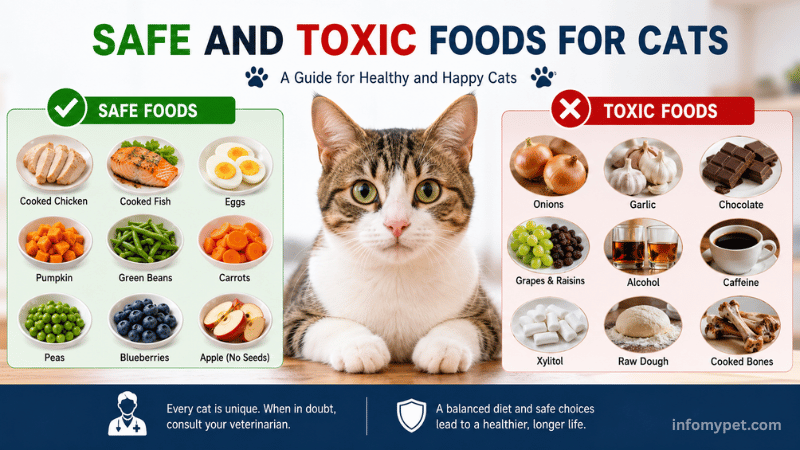
Why Understanding Safe and Toxic Foods for Cats Is Important
Many cat owners assume that if a food is healthy for humans, it must also be healthy for cats. Unfortunately, this assumption can lead to accidental poisoning and serious medical emergencies.
Cats are obligate carnivores, which means they require nutrients that are primarily found in animal-based protein sources. Their bodies have evolved to depend on meat for survival, and they process certain compounds differently compared to humans and other animals.
When cats consume inappropriate foods, they may experience symptoms ranging from mild digestive upset to severe organ damage. In some cases, toxic foods can cause irreversible health complications or death if treatment is delayed.
By learning about safe and toxic foods for cats, pet owners can prevent avoidable accidents and ensure their pets enjoy a long and healthy life.
Understanding a Cat's Nutritional Needs
Before discussing specific foods, it is important to understand what cats require nutritionally.
Cats need:
- High-quality animal protein
- Essential amino acids such as taurine
- Healthy fats
- Vitamins and minerals
- Fresh water
Unlike humans, cats have limited ability to process carbohydrates and plant-based nutrients efficiently. Their diet should primarily consist of meat-based ingredients that support muscle development, organ function, and overall health.
Commercial cat foods are specially formulated to meet these requirements, but certain human foods can also be offered safely as occasional treats.
Safe Foods for Cats
Many foods are safe for cats when given in moderation and prepared properly.
Cooked Chicken
Cooked chicken is one of the safest and most beneficial foods for cats. It is rich in protein, easy to digest, and closely resembles the natural diet of felines.
Plain boiled or baked chicken without seasoning provides essential amino acids that help maintain muscle mass and support healthy body functions.
Owners should avoid feeding fried chicken or chicken prepared with garlic, onions, excessive salt, or spices.
Cooked Turkey
Turkey is another excellent source of lean protein for cats. It contains important nutrients that contribute to healthy muscles, skin, and immune function.
Plain cooked turkey can be offered as an occasional treat or mixed with regular cat food to encourage eating.
Any skin, bones, seasoning, or processed turkey products should be removed before feeding.
Cooked Fish
Many cats enjoy fish because of its strong aroma and flavor.
Cooked salmon, tuna, and sardines provide beneficial omega-3 fatty acids that support:
| Benefit | Description |
|---|---|
| Healthy Skin | Helps reduce dryness and irritation |
| Shiny Coat | Supports coat quality and appearance |
| Joint Health | May help reduce inflammation |
| Brain Function | Supports cognitive health |
Fish should always be cooked thoroughly to eliminate parasites and harmful bacteria.
Eggs
Fully cooked eggs are a nutritious food for cats.
They contain:
- Protein
- Healthy fats
- Vitamins
- Minerals
Cooked eggs can serve as a healthy occasional snack. However, raw eggs should be avoided because they may contain harmful bacteria such as Salmonella.
Pumpkin
Plain cooked pumpkin is often recommended by veterinarians because it contains dietary fiber that supports digestive health.
Pumpkin may help cats experiencing:
- Mild constipation
- Digestive irregularities
- Hairball issues
Only plain pumpkin should be used. Pumpkin pie filling contains sugar and spices that are unsuitable for cats.
Green Beans
Green beans are low in calories and contain beneficial nutrients.
They can be offered as a healthy snack, particularly for overweight cats that need lower-calorie treats.
Serve green beans cooked and unseasoned.
Carrots
Cooked carrots contain vitamins and antioxidants that may support overall health.
Since cats cannot effectively chew hard raw carrots, they should be cooked until soft before serving.
Peas
Peas are commonly included in commercial cat food formulations.
They contain vitamins, fiber, and minerals that can complement a balanced diet.
Cats generally tolerate peas well when offered in small quantities.
Apples
Small pieces of apple flesh can be safely given to cats.
Apples contain vitamins and fiber that may offer minor nutritional benefits.
However, apple seeds, stems, and cores should always be removed because they contain compounds that can be harmful.
Blueberries
Blueberries are rich in antioxidants that help protect cells from oxidative damage.
Although cats may not be naturally attracted to fruit, some enjoy blueberries as an occasional treat.
Rice
Plain cooked rice can sometimes be useful for cats experiencing mild digestive upset.
Rice is easy to digest and may help settle the stomach when recommended by a veterinarian.
However, rice should never replace a protein-rich feline diet.
Toxic Foods for Cats
Certain foods should never be given to cats because they can cause severe health problems.
Onions
Onions are among the most dangerous foods for cats.
They contain compounds that damage red blood cells, potentially leading to anemia.
Symptoms of onion poisoning may include:
- Weakness
- Lethargy
- Pale gums
- Difficulty breathing
- Reduced appetite
All forms of onion are dangerous, including:
- Raw onions
- Cooked onions
- Onion powder
- Dehydrated onions
Garlic
Garlic is even more toxic than onions.
Many people mistakenly believe garlic offers health benefits for pets, but it can cause significant damage to feline red blood cells.
Even small amounts may be harmful, particularly for smaller cats.
Chocolate
Chocolate contains substances known as theobromine and caffeine.
Cats cannot efficiently metabolize these compounds, making chocolate highly dangerous.
Symptoms of chocolate poisoning may include:
- Vomiting
- Diarrhea
- Rapid heart rate
- Tremors
- Seizures
Dark chocolate and baking chocolate contain particularly high concentrations of toxic compounds.
Grapes and Raisins
Although researchers do not fully understand the exact mechanism, grapes and raisins can cause kidney failure in pets.
Some animals may react severely after consuming only a small quantity.
Because of the unpredictable nature of grape toxicity, these foods should always be kept away from cats.
Alcohol
Alcohol can rapidly affect a cat's nervous system and internal organs.
Even tiny amounts may cause:
- Disorientation
- Vomiting
- Breathing difficulties
- Coma
Alcohol-containing foods and beverages should never be accessible to pets.
Caffeine
Caffeine is found in:
- Coffee
- Tea
- Energy drinks
- Certain soft drinks
Cats are extremely sensitive to caffeine.
Consumption may result in:
- Hyperactivity
- Elevated heart rate
- Tremors
- Seizures
Xylitol
Xylitol is an artificial sweetener commonly found in sugar-free products.
It may be present in:
- Gum
- Candy
- Baked goods
- Peanut butter products
Although xylitol poisoning is more common in dogs, it should still be considered dangerous for cats and avoided completely.
Raw Dough
Uncooked bread dough can expand inside the digestive system.
This expansion may cause severe discomfort and bloating.
Additionally, fermentation can produce alcohol, creating another serious health risk.
Raw Meat
Many people assume raw meat is natural and therefore safe for cats.
However, raw meat can contain harmful bacteria such as:
- Salmonella
- E. coli
- Listeria
These pathogens can cause illness in both pets and household members.
Raw Fish
Raw fish contains enzymes that may interfere with vitamin absorption.
Frequent consumption can contribute to nutritional deficiencies and health complications.
Cooking fish eliminates many of these concerns.
Fat Trimmings
Excessive fatty foods can increase the risk of pancreatitis.
Fat trimmings from meat should not be offered to cats because they can trigger digestive problems and inflammation.
Bones
Cooked bones can splinter easily.
Bone fragments may:
- Damage the mouth
- Cause choking
- Injure internal organs
- Create intestinal blockages
For this reason, cooked bones should never be given to cats.
Signs of Food Poisoning in Cats
Recognizing symptoms early can improve the chances of successful treatment.
Common signs of food poisoning include:
| Symptom | Possible Indication |
|---|---|
| Vomiting | Digestive irritation |
| Diarrhea | Gastrointestinal distress |
| Excessive Drooling | Toxic reaction |
| Weakness | Systemic illness |
| Tremors | Neurological involvement |
| Seizures | Severe poisoning |
| Difficulty Breathing | Emergency condition |
| Loss of Appetite | Underlying illness |
| Lethargy | General toxicity |
Any unusual symptoms following food consumption should be treated seriously.
What to Do If Your Cat Eats a Toxic Food
If you suspect your cat has eaten something toxic, immediate action is essential.
Stay Calm
Remaining calm helps you think clearly and gather important information.
Identify the Food
Determine exactly what your cat consumed and estimate the quantity whenever possible.
Contact a Veterinarian Immediately
Professional veterinary advice should be sought as quickly as possible.
Prompt treatment often significantly improves outcomes.
Do Not Attempt Home Remedies
Avoid inducing vomiting or administering medications unless specifically instructed by a veterinarian.
Certain home treatments may worsen the situation.
Monitor Symptoms
Observe your cat carefully while seeking professional help.
Provide your veterinarian with detailed information regarding symptoms and timing.
Tips for Feeding Cats Safely
Following a few simple precautions can greatly reduce the risk of accidental poisoning.
Store Foods Securely
Keep potentially dangerous foods in sealed containers and out of reach.
Read Ingredient Labels
Some products contain hidden ingredients such as onion powder, garlic powder, or xylitol.
Always check labels before sharing food.
Avoid Table Scraps
Many human foods contain seasonings and additives that are unsuitable for cats.
Introduce New Foods Gradually
Sudden dietary changes may upset a cat's digestive system.
Introduce any new food slowly and in small amounts.
Prioritize Complete Cat Food
Commercial cat food formulated according to feline nutritional requirements should remain the foundation of the diet.
Treats and human foods should only be occasional additions.
Conclusion
Understanding safe and toxic foods for cats is one of the most important responsibilities of pet ownership. While certain foods such as cooked chicken, turkey, fish, eggs, pumpkin, and selected fruits and vegetables can be offered safely in moderation, many common household foods pose serious dangers. Onions, garlic, chocolate, grapes, alcohol, caffeine, raw dough, and several other foods can lead to severe illness or even death.
By learning which foods are safe and which are toxic, cat owners can make better dietary choices and protect their feline companions from preventable health emergencies. Maintaining a balanced feline diet, monitoring food intake carefully, and consulting a veterinarian whenever concerns arise will help ensure that cats remain healthy, active, and happy throughout their lives.
Frequently Asked Questions (FAQs)
What are the safest human foods for cats?
Some of the safest human foods for cats include plain cooked chicken, cooked turkey, cooked fish, fully cooked eggs, pumpkin, peas, green beans, and small amounts of certain fruits such as blueberries and apples without seeds. These foods should be offered in moderation and should never replace a complete and balanced cat food diet.
Can cats eat cheese?
Cats can eat small amounts of cheese occasionally, but many cats are lactose intolerant. Consuming too much cheese may cause digestive issues such as diarrhea, gas, or stomach discomfort. Cheese should only be given as an occasional treat and not as a regular part of a cat's diet.
Why are onions and garlic toxic to cats?
Onions and garlic contain compounds that can damage a cat's red blood cells. This damage may lead to anemia, a potentially serious condition that reduces the body's ability to transport oxygen. Both raw and cooked forms are dangerous, including powders and seasonings that contain onion or garlic.
Can cats eat tuna?
Cats can eat plain cooked tuna in small amounts as an occasional treat. However, feeding tuna too frequently may lead to nutritional imbalances because it does not provide all the nutrients cats need. Tuna packed in oil, brine, or heavily seasoned products should be avoided.
Are fruits safe for cats?
Some fruits are safe for cats when offered in small portions. Examples include blueberries, watermelon, and apples without seeds. However, fruits should only be occasional treats because cats are obligate carnivores and do not require fruit as a major part of their diet.
What foods should cats never eat?
Cats should never eat onions, garlic, chocolate, grapes, raisins, alcohol, caffeine, xylitol, raw dough, cooked bones, and foods containing excessive salt or seasoning. These foods can cause serious health problems and may require immediate veterinary attention.
How can I tell if my cat has food poisoning?
Common signs of food poisoning in cats include vomiting, diarrhea, drooling, weakness, lethargy, loss of appetite, tremors, seizures, and difficulty breathing. If your cat shows any of these symptoms after eating a questionable food, contact a veterinarian immediately.
Can cats drink milk?
Many people believe cats enjoy milk, but most adult cats are lactose intolerant. Drinking milk can cause digestive upset, including diarrhea and stomach discomfort. Fresh water is the healthiest and safest drink for cats.
Is cooked fish better than raw fish for cats?
Yes, cooked fish is generally safer than raw fish. Cooking helps eliminate harmful bacteria and parasites that may be present in raw fish. It also reduces the risk of nutritional deficiencies associated with certain enzymes found in raw fish.
What should I do if my cat eats a toxic food?
If your cat consumes a potentially toxic food, contact your veterinarian immediately. Try to identify the food and estimate the amount consumed. Do not attempt home remedies or induce vomiting unless specifically instructed by a veterinary professional. Prompt treatment can significantly improve the chances of recovery.
Can cats eat dog food?
Dog food is not toxic to cats, but it is not nutritionally complete for them. Cats require specific nutrients such as taurine that are found in appropriate amounts in cat food. Long-term feeding of dog food can lead to nutritional deficiencies and health problems.
How often can I give human food to my cat?
Human foods that are safe for cats should only be offered occasionally as treats. Most veterinarians recommend that treats make up no more than 10% of a cat's daily calorie intake, while the majority of their diet should come from high-quality cat food formulated to meet feline nutritional requirements.
References
- Foods that are Dangerous or Toxic to Cats - hillspet.com.my
- What Can't Cats Eat? 8 Toxic Foods for Cats - petmd.com
Disclaimer: The information shared on InfoMyPet is based on my personal experience in caring for my pets and is provided for general informational and entertainment purposes only.I am sharing my experiences, tips, and observations to help other pet owners, but the information on this blog should not be considered professional veterinary advice, diagnosis, treatment, or a substitute for consultation with a qualified veterinarian.Every pet is different, and what works for my pets may not be suitable for another pet. If your pet is sick, injured, showing unusual symptoms, or requires medical attention, please consult a qualified veterinarian for proper advice and treatment.InfoMyPet and its owner are not responsible for any loss, injury, or other consequences resulting from the use of information shared on this blog.By using this website, you acknowledge and agree that you use the information provided here at your own discretion and risk.


0 Comments