
Pets are an important part of many families, and their health depends greatly on the food they consume every day. While many pet owners enjoy sharing snacks and meals with their beloved cats and dogs, not all human foods are suitable for animals. Some foods can provide valuable nutrients and health benefits, while others can cause serious illness, organ damage, or even death.
Understanding the difference between safe foods and toxic foods for cats and dogs is essential for responsible pet ownership. Many cases of pet poisoning occur because owners are unaware that certain common household foods pose significant risks. Foods that seem harmless to humans can have devastating effects on pets due to differences in their digestive systems and metabolism.
This comprehensive guide explores safe foods for cats and dogs, highlights the most dangerous toxic foods for cats and dogs, and provides practical advice on preventing accidental poisoning.
Table of Contents
Safe and Toxic Foods for Cats and Dogs
Why Some Human Foods Are Dangerous for Pets
Cats and dogs process food differently from humans. Their bodies lack certain enzymes needed to break down specific compounds found in common foods. As a result, substances that humans consume safely may become highly toxic when ingested by pets.
Cats are obligate carnivores, meaning they require nutrients that are primarily found in animal-based foods. Dogs are more omnivorous and can tolerate a wider variety of foods, but they are still vulnerable to many harmful ingredients.
The severity of food poisoning depends on several factors, including:
- The type of food consumed
- The amount eaten
- The size and weight of the pet
- The pet’s age
- Existing health conditions
- How quickly treatment is provided
Recognizing dangerous foods and keeping them out of reach is one of the most effective ways to protect pets from preventable emergencies.
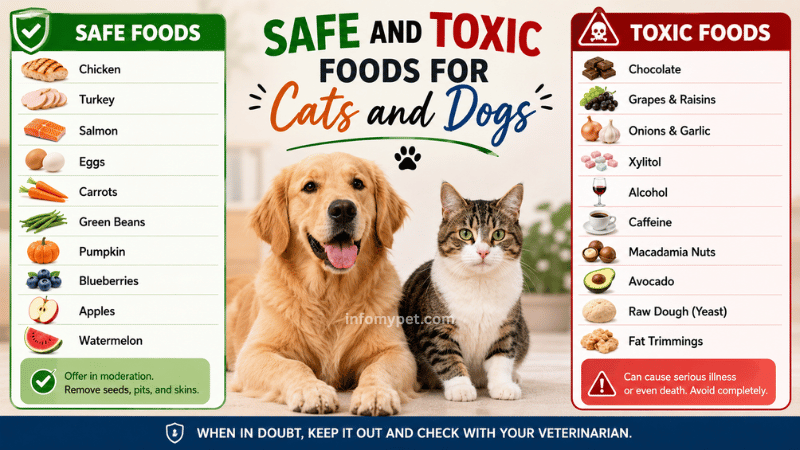
Common Toxic Foods for Cats and Dogs
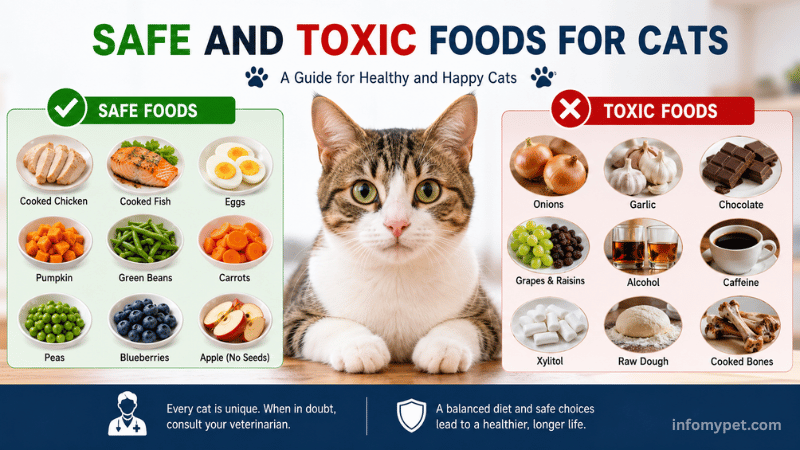
The following foods are among the most dangerous toxic foods for cats and dogs and should never be intentionally fed to pets.
Chocolate
Chocolate is one of the most well-known pet toxins. It contains compounds called theobromine and caffeine, both of which can be highly toxic to cats and dogs.
Dark chocolate and baking chocolate contain higher concentrations of these substances and are therefore more dangerous than milk chocolate.
Possible symptoms include:
- Vomiting
- Diarrhea
- Increased heart rate
- Hyperactivity
- Tremors
- Seizures
- Death in severe cases
Even small amounts can be harmful, particularly for smaller animals.
Grapes and Raisins
Grapes and raisins can cause sudden kidney failure in dogs. While the exact toxic compound remains unclear, veterinarians have documented numerous cases of severe poisoning linked to these fruits.
Some dogs may become seriously ill after consuming only a few grapes or raisins.
Symptoms may include:
- Vomiting
- Lethargy
- Loss of appetite
- Dehydration
- Reduced urination
- Kidney failure
Because the toxic response varies between animals, all grape and raisin exposure should be treated as a medical emergency.
Onions, Garlic, and Chives
Members of the allium family, including onions, garlic, shallots, leeks, and chives, can damage red blood cells in cats and dogs.
Repeated exposure or consumption of large quantities may result in anemia.
Signs of poisoning include:
- Weakness
- Pale gums
- Rapid breathing
- Lethargy
- Reduced appetite
Cats are generally more sensitive to allium toxicity than dogs.
Xylitol
Xylitol is an artificial sweetener commonly found in sugar-free gum, candy, baked goods, toothpaste, and some peanut butter products.
For dogs, xylitol can trigger a rapid release of insulin, causing a dangerous drop in blood sugar levels.
Symptoms may include:
- Weakness
- Vomiting
- Loss of coordination
- Seizures
- Liver failure
Even very small amounts can be life-threatening.
Alcohol
Alcohol affects pets much more severely than humans. Even small quantities can depress the central nervous system and cause serious health complications.
Alcohol may be present in:
- Beer
- Wine
- Spirits
- Fermented dough
- Certain desserts
Symptoms can include:
- Vomiting
- Difficulty breathing
- Disorientation
- Tremors
- Coma
Alcohol should never be given to pets under any circumstances.
Caffeine
Caffeine is found in coffee, tea, energy drinks, soda, supplements, and certain medications.
Because pets are highly sensitive to caffeine, ingestion can lead to severe stimulation of the nervous system.
Symptoms include:
- Hyperactivity
- Elevated heart rate
- Restlessness
- Tremors
- Seizures
Prompt veterinary care is essential if caffeine consumption is suspected.
Macadamia Nuts
Macadamia nuts are particularly toxic to dogs.
Although the exact mechanism is not fully understood, affected dogs may experience:
- Weakness
- Tremors
- Fever
- Vomiting
- Difficulty walking
Symptoms typically develop within several hours of ingestion.
Avocado
Avocados contain a compound known as persin. While dogs may tolerate small amounts of avocado flesh, excessive consumption can lead to digestive upset.
The large pit also presents a choking hazard and may cause intestinal obstruction.
Cats should generally avoid avocado products.
Raw Dough Containing Yeast
Uncooked yeast dough can continue to rise inside the stomach, causing painful expansion and potentially life-threatening complications.
As the dough ferments, it can also produce alcohol, increasing the risk of alcohol poisoning.
Symptoms include:
- Abdominal swelling
- Pain
- Vomiting
- Breathing difficulties
This condition requires immediate veterinary attention.
Fat Trimmings and Greasy Foods
Many owners assume that leftover meat scraps are safe treats. However, excessive fat can trigger pancreatitis, a serious inflammatory condition affecting the pancreas.
Foods commonly associated with pancreatitis include:
- Bacon grease
- Fried foods
- Fatty meat trimmings
- Rich table scraps
Affected pets may develop severe vomiting, abdominal pain, and dehydration.
Toxic Foods That Are Especially Dangerous for Cats
Certain foods pose particular risks to cats because of their unique nutritional requirements and metabolism.
Raw Fish in Excess
While fish is often associated with cats, excessive raw fish consumption may lead to nutritional imbalances and vitamin deficiencies.
Some raw fish contain enzymes that destroy thiamine, an essential vitamin for feline health.
Severe deficiencies may result in:
- Neurological problems
- Seizures
- Loss of appetite
Dog Food as a Long-Term Diet
Although dog food is not poisonous, it does not provide the complete nutrition that cats require.
Cats need taurine, arachidonic acid, and other nutrients found primarily in animal proteins. Long-term feeding of dog food can result in serious health complications.
Dairy Products
Many adult cats are lactose intolerant. Milk, cream, and certain dairy products can cause digestive discomfort.
Symptoms may include:
- Diarrhea
- Gas
- Stomach upset
Although dairy is not usually toxic, it should be offered cautiously.
Safe Human Foods for Cats and Dogs
Many human foods can be safely offered as occasional treats when prepared properly and served in moderation.
Cooked Chicken
Plain cooked chicken is an excellent source of lean protein for both cats and dogs.
It should be:
- Fully cooked
- Unseasoned
- Boneless
- Free from sauces and marinades
Chicken provides essential amino acids that support muscle development and overall health.
Turkey
Cooked turkey is another nutritious protein option.
Pet owners should avoid:
- Excess salt
- Gravy
- Stuffing
- Bones
When served correctly, turkey can be a healthy addition to a pet's diet.
Salmon
Cooked salmon contains beneficial omega-3 fatty acids that support skin, coat, heart, and joint health.
Always serve salmon fully cooked to reduce the risk of parasites and bacterial contamination.
Eggs
Cooked eggs provide high-quality protein, vitamins, and minerals.
Benefits include:
- Muscle support
- Healthy skin
- Strong coat condition
Eggs should always be cooked thoroughly before feeding.
Carrots
Carrots are low in calories and rich in fiber and vitamin A.
Many dogs enjoy chewing carrot sticks as a healthy snack, and some cats may also show interest.
Green Beans
Green beans are often recommended as a healthy treat, particularly for overweight dogs.
They provide:
- Fiber
- Vitamins
- Minerals
Green beans can help pets feel full without excessive calorie intake.
Pumpkin
Plain pumpkin is widely used to support digestive health.
It may help with:
- Mild constipation
- Digestive irregularities
- Stool consistency
Only plain pumpkin should be used. Pumpkin pie filling often contains sugar and spices that are unsuitable for pets.
Blueberries
Blueberries contain antioxidants that help protect cells from oxidative damage.
These small fruits are:
- Low in calories
- Rich in nutrients
- Easy to serve
Many dogs enjoy them as training treats.
Apples
Apples can provide fiber and vitamin C.
Before serving:
- Remove seeds
- Remove the core
- Cut into manageable pieces
Apple seeds contain compounds that may be harmful when consumed in large quantities.
Watermelon
Seedless watermelon can be a refreshing treat during hot weather.
It contains:
- High water content
- Vitamins A and C
- Low calorie levels
Always remove seeds and rind before feeding.
Foods That Should Be Limited Rather Than Completely Avoided
Some foods are not necessarily toxic but should be offered only occasionally.
| Food | Reason for Limitation |
|---|---|
| Cheese | High fat content may cause digestive upset |
| Peanut Butter | Some brands contain xylitol |
| Bread | Limited nutritional value |
| Rice | Safe but should not replace balanced meals |
| Bananas | High natural sugar content |
Moderation remains important even when foods are considered safe.
Signs of Food Poisoning in Pets
Recognizing symptoms early can significantly improve treatment outcomes.
Common warning signs include:
- Vomiting
- Diarrhea
- Drooling
- Loss of appetite
- Weakness
- Tremors
- Seizures
- Breathing difficulties
- Abdominal pain
- Collapse
Symptoms may appear within minutes or may take several hours depending on the toxin involved.
What to Do If Your Pet Eats a Toxic Food
If you suspect that your pet has consumed one of the toxic foods for cats and dogs, immediate action is critical.
Stay Calm
Panic can delay effective decision-making. Focus on gathering information about what was consumed and how much may have been eaten.
Remove Access to the Food
Prevent further ingestion by securing the remaining food and moving it out of reach.
Contact a Veterinarian Immediately
Call your veterinarian or an emergency animal clinic as soon as possible. Early intervention often results in better outcomes.
Save Packaging and Labels
Product labels may help veterinarians identify potentially harmful ingredients and determine the best treatment approach.
Monitor Symptoms
Observe your pet closely while seeking professional assistance. Record any changes in behavior or physical condition.
Avoid Home Remedies
Do not attempt to induce vomiting or administer medications unless specifically instructed by a veterinary professional.
Tips for Preventing Food-Related Poisoning
Preventing poisoning is much easier than treating it.
Effective prevention strategies include:
- Keeping dangerous foods in sealed containers
- Storing groceries safely
- Educating family members about pet-safe foods
- Supervising pets during gatherings and holidays
- Reading ingredient labels carefully
- Avoiding feeding table scraps
- Using pet-approved treats whenever possible
Consistency and awareness can significantly reduce the risk of accidental poisoning.
Conclusion
Understanding the difference between safe foods and toxic foods for cats and dogs is one of the most important responsibilities of pet ownership. While many human foods can serve as healthy treats when offered appropriately, others can cause severe illness, organ damage, or even death. Chocolate, grapes, raisins, onions, garlic, xylitol, alcohol, caffeine, and several other common household foods should always be kept away from pets.
By learning which foods are safe, recognizing the symptoms of poisoning, and acting quickly during emergencies, pet owners can help protect their cats and dogs from avoidable health risks. A balanced, species-appropriate diet combined with informed food choices remains the best way to support a pet’s long-term health, happiness, and well-being.
FAQ
Can my pet eat peanut butter?
Yes, but only in moderation and as long as it does not contain xylitol, which is toxic to dogs. Choose natural, unsweetened peanut butter for a safe treat.
Is it safe to give my pet dairy products?
Some pets are lactose intolerant, so dairy may cause stomach upset. If your pet tolerates dairy well, small amounts of plain yogurt or cheese can be a suitable option.
What should I do if my pet eats toxic food?
If you suspect your pet has ingested toxic food, immediately contact your veterinarian or an emergency pet poison hotline. Do not attempt to induce vomiting unless instructed by a professional.
Are all fruits safe for pets?
Some fruits, such as grapes, raisins, and cherries, are toxic to pets. Safe fruits include apples (without seeds), bananas, and blueberries.
Can dogs and cats eat the same foods?
While some foods are safe for both, cats have different nutritional needs. Always ensure their diet meets their specific dietary requirements.
Are commercial pet treats safer than homemade options?
Not always. Some commercial pet treats contain harmful additives. Homemade treats can be a good alternative, provided they are made with pet-safe ingredients.
References
- Toxic Foods for Dogs and Cats: An A-Z Guide - animalemergencyservice.com.au
- Harmful Substances and Foods for Dogs - purina.com.my
Disclaimer: The information shared on InfoMyPet is based on my personal experience in caring for my pets and is provided for general informational and entertainment purposes only.I am sharing my experiences, tips, and observations to help other pet owners, but the information on this blog should not be considered professional veterinary advice, diagnosis, treatment, or a substitute for consultation with a qualified veterinarian.Every pet is different, and what works for my pets may not be suitable for another pet. If your pet is sick, injured, showing unusual symptoms, or requires medical attention, please consult a qualified veterinarian for proper advice and treatment.InfoMyPet and its owner are not responsible for any loss, injury, or other consequences resulting from the use of information shared on this blog.By using this website, you acknowledge and agree that you use the information provided here at your own discretion and risk.


0 Comments