
Bringing home a new puppy or kitten is an exciting experience filled with joy, companionship, and countless memorable moments. However, raising a well-behaved and confident pet requires more than simply providing food, shelter, and affection. Proper training plays a crucial role in helping young animals develop positive behaviors, build trust with their owners, and adapt successfully to their environment.
Many pet owners underestimate the importance of early training, believing that puppies and kittens will naturally learn good behavior as they grow older. While some behaviors may improve with age, consistent and structured training is essential for teaching pets how to interact appropriately with people, other animals, and their surroundings.
Understanding the best training methods for puppies and kittens can help pet owners establish a strong foundation for lifelong success. Effective training not only reduces unwanted behaviors but also strengthens the bond between pets and their families. When conducted correctly, training becomes an enjoyable and rewarding experience for both the owner and the animal.
This comprehensive guide explores the best training methods for puppies and kittens, including practical techniques, common mistakes to avoid, and tips for creating a positive learning environment.
Table of Contents
The Best Training Methods for Puppies and Kittens: A Complete Guide to Raising Happy and Obedient Pets

Why Early Training Matters
The early months of a puppy's or kitten's life represent a critical developmental period. During this stage, young animals are highly receptive to learning and forming habits that can influence their behavior throughout adulthood.
Early training helps pets understand expectations within the household. Puppies learn where to eliminate, how to walk on a leash, and how to respond to commands. Kittens learn proper litter box habits, appropriate scratching behavior, and how to interact calmly with humans.
Training also contributes significantly to emotional development. Pets that receive consistent guidance often become more confident, less fearful, and better equipped to handle new experiences. This confidence can reduce anxiety-related behaviors and make social interactions more enjoyable.
Furthermore, training improves safety. A puppy that reliably responds to commands such as "come" or "stay" is less likely to encounter dangerous situations. Similarly, a kitten trained to avoid certain areas of the home can be protected from potential hazards.
Understanding How Puppies and Kittens Learn
Before discussing specific techniques, it is important to understand how young animals learn.
Both puppies and kittens primarily learn through association and repetition. They repeat behaviors that produce positive outcomes and avoid behaviors that lead to unpleasant consequences or no reward.
Training should focus on encouraging desired behaviors rather than punishing mistakes. Positive experiences create stronger learning associations and help pets feel secure during the training process.
Young animals also have short attention spans. Training sessions should be brief, engaging, and consistent. Multiple short sessions throughout the day are generally more effective than a single lengthy session.
Patience is equally important. Learning takes time, and every pet develops at its own pace. Comparing one pet to another can lead to unrealistic expectations and frustration.
Positive Reinforcement: The Most Effective Training Method
Positive reinforcement is widely recognized as one of the best training methods for puppies and kittens.
This approach involves rewarding desired behaviors immediately after they occur. Rewards may include treats, praise, toys, petting, or playtime.
For example:
- A puppy sits when asked and receives a treat.
- A kitten uses the scratching post and receives praise.
- A puppy eliminates outdoors and receives a reward.
- A kitten enters the carrier calmly and receives a favorite snack.
Positive reinforcement helps pets associate good behavior with positive outcomes. As a result, they become more likely to repeat those behaviors in the future.
Benefits of Positive Reinforcement
Positive reinforcement has become the preferred training approach among professional trainers, veterinarians, and animal behavior experts because it focuses on encouraging desirable behaviors rather than punishing mistakes. By rewarding pets when they perform the correct action, owners can create a positive learning environment that motivates puppies and kittens to repeat those behaviors in the future. This method not only improves learning efficiency but also helps build confidence, trust, and a stronger relationship between pets and their owners.
The following table highlights some of the key benefits of using positive reinforcement when training young pets.
| Benefit | Explanation |
|---|---|
| Builds trust | Pets learn that training experiences are safe and rewarding. |
| Encourages learning | Rewards motivate pets to repeat desired behaviors. |
| Reduces fear | Positive methods avoid creating anxiety or stress. |
| Strengthens bonding | Training becomes an enjoyable shared activity. |
| Produces lasting results | Pets willingly perform behaviors rather than acting out of fear. |
Consistency is essential when using positive reinforcement. Rewards should be provided immediately after the desired behavior occurs so that the pet clearly understands what is being rewarded.
Clicker Training for Puppies and Kittens
Clicker training is another highly effective method that works well for both puppies and kittens.
A clicker is a small device that produces a distinct clicking sound. The click serves as a marker that tells the pet exactly when they have performed the correct behavior.
The training process generally follows these steps:
- The pet performs the desired action.
- The owner immediately clicks.
- The owner provides a reward.
Over time, the pet learns that the click predicts a reward.
Advantages of Clicker Training
- Provides precise communication.
- Accelerates learning.
- Increases training consistency.
- Works well for teaching complex behaviors.
- Suitable for both dogs and cats.
Many pet owners are surprised to discover that kittens respond exceptionally well to clicker training. Cats can learn commands, tricks, and various behaviors when training sessions are engaging and rewarding.
Socialization Training
Socialization is one of the most important aspects of early pet development.
Proper socialization helps puppies and kittens become comfortable with different people, animals, sounds, environments, and experiences.
Socializing Puppies
Puppies should gradually be introduced to:
- Adults
- Children
- Other vaccinated dogs
- Different surfaces
- Car rides
- Grooming activities
- Household noises
These experiences should be positive and controlled. Avoid overwhelming the puppy with too many new situations at once.
Socializing Kittens
Kittens benefit from exposure to:
- Various people
- Gentle handling
- Household sounds
- Carriers
- Veterinary visits
- Different rooms within the home
Positive socialization can help prevent fearfulness and behavioral issues later in life.
House Training Puppies
House training is often one of the first priorities for new puppy owners.
Successful house training requires consistency, supervision, and patience.
Establish a Routine
Puppies thrive on predictable schedules. Take the puppy outside:
- First thing in the morning
- After meals
- After naps
- After play sessions
- Before bedtime
Frequent opportunities reduce the likelihood of accidents indoors.
Reward Success Immediately
When the puppy eliminates in the correct location, provide praise and a reward immediately. Delayed rewards may prevent the puppy from making the correct association.
Supervise Closely
When indoors, monitor the puppy carefully. Watch for signs such as:
- Sniffing the floor
- Circling
- Restlessness
- Suddenly wandering away
These behaviors often indicate that the puppy needs to go outside.
Avoid Punishment
Punishing accidents can create fear and confusion. Instead, clean accidents thoroughly and focus on preventing future occurrences.
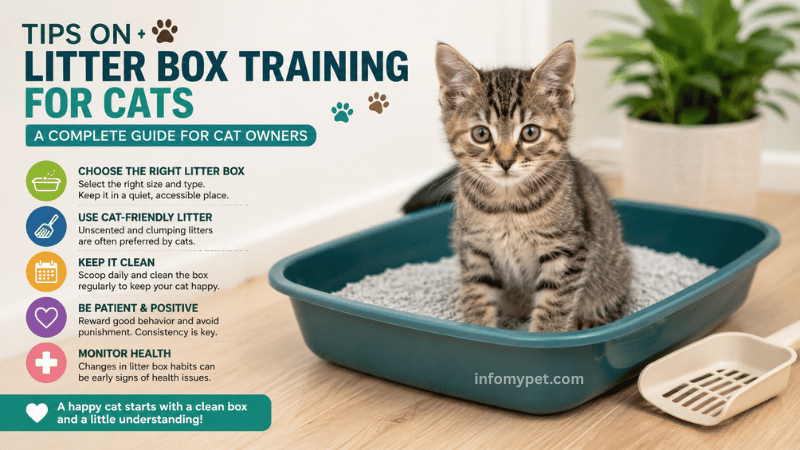
Litter Box Training Kittens
Fortunately, many kittens naturally develop litter box habits. However, proper setup and guidance are still important.
Choose the Right Litter Box
The litter box should:
- Be easily accessible
- Have low sides for young kittens
- Be cleaned regularly
- Be placed in a quiet location
Introduce the Litter Box Early
Place kittens in the litter box:
- After meals
- After naps
- During periods of increased activity
This helps them become familiar with the location and purpose of the box.
Keep the Box Clean
Cats are naturally clean animals. A dirty litter box may discourage use and contribute to inappropriate elimination behaviors.
Teaching Basic Commands to Puppies
Basic obedience commands provide structure and improve communication between owner and pet.
Sit
The "sit" command is often the first behavior taught to puppies.
Hold a treat above the puppy's nose and slowly move it backward. As the puppy naturally sits, reward immediately.
Stay
Once the puppy understands "sit," begin teaching "stay" using short durations and gradual increases in distance.
Come
Reliable recall is one of the most important safety commands.
Use a cheerful voice and reward generously whenever the puppy comes when called.
Leave It
This command helps prevent puppies from picking up potentially dangerous objects.
Consistent practice can significantly improve impulse control.
Teaching Kittens Simple Commands
Although many people associate training primarily with dogs, kittens can also learn a variety of commands.
Come When Called
Use the kitten's name followed by a consistent cue.
Reward immediately whenever the kitten approaches.
Target Training
Target training involves teaching the kitten to touch a specific object, such as a stick or finger, with its nose.
This technique can later be used to guide the kitten into carriers, onto scales, or through obstacle courses.
Sit
Many kittens can learn to sit using positive reinforcement and food rewards.
Short sessions are usually most effective.
Managing Unwanted Behaviors
Training is not only about teaching desired behaviors but also about reducing undesirable ones.
Common Puppy Problems
Excessive Chewing
Provide appropriate chew toys and redirect attention whenever the puppy begins chewing inappropriate items.
Jumping on People
Reward calm greetings and avoid giving attention when the puppy jumps.
Barking
Identify the cause of barking and address the underlying trigger rather than simply reacting to the noise.
Common Kitten Problems
Scratching Furniture
Provide multiple scratching posts and reward their use.
Climbing Restricted Areas
Use redirection and environmental management rather than punishment.
Biting During Play
Stop interaction briefly whenever biting becomes too rough and provide appropriate toys.
Crate Training Puppies
Crate training can provide a safe and secure environment for puppies.
When introduced properly, a crate becomes a comfortable resting area rather than a form of punishment.
Tips for Successful Crate Training
- Introduce the crate gradually.
- Place comfortable bedding inside.
- Offer treats and meals in the crate.
- Never use the crate as punishment.
- Increase crate time slowly.
Many puppies learn to view their crate as a personal safe space where they can relax and feel secure.
Carrier Training Kittens
Carrier training is equally important for kittens.
Many cats develop anxiety around carriers because they only encounter them during veterinary visits.
Making the Carrier Positive
- Leave the carrier accessible year-round.
- Place treats inside regularly.
- Add comfortable bedding.
- Allow the kitten to explore voluntarily.
This reduces stress and makes future travel experiences much easier.
The Importance of Consistency
Consistency is one of the most overlooked aspects of successful training.
Pets learn faster when household rules remain predictable.
For example:
- If jumping on guests is not allowed, the rule should apply consistently.
- If certain furniture is off-limits, all family members should enforce the same boundary.
Mixed messages can confuse pets and slow the learning process.
Common Training Mistakes to Avoid
Inconsistent Rules
Changing expectations frequently makes learning difficult.
Punishing Mistakes
Punishment may create fear without teaching the correct behavior.
Expecting Immediate Results
Training requires repetition and patience.
Long Training Sessions
Short, engaging sessions are generally more productive.
Ignoring Good Behavior
Many owners only react to unwanted behaviors. Rewarding desirable actions helps reinforce positive habits.
Creating a Positive Training Environment
The training environment can significantly influence learning success.
Choose locations that:
- Minimize distractions
- Promote comfort
- Encourage focus
- Allow gradual progression
As skills improve, gradually introduce more challenging environments.
Positive experiences help pets remain engaged and motivated throughout the training process.
Building a Strong Bond Through Training
Training is not simply about obedience. It is also an opportunity to strengthen the relationship between pets and their owners.
Every successful training session reinforces communication, trust, and mutual understanding.
Pets that receive positive guidance often become more responsive, confident, and emotionally secure. Owners gain a deeper understanding of their pet's personality, preferences, and learning style.
This stronger bond contributes to a happier household and a more fulfilling companionship experience for years to come.
Conclusion
The best training methods for puppies and kittens focus on patience, consistency, positive reinforcement, and clear communication. Early training helps establish good habits, prevents behavioral problems, and creates a strong foundation for lifelong success.
Whether teaching a puppy to respond to basic commands or helping a kitten develop proper litter box habits, positive training techniques produce the most reliable and lasting results. Methods such as positive reinforcement, clicker training, socialization, and consistent routines encourage learning while strengthening trust between pets and their owners.
By investing time and effort into training during the early stages of life, pet owners can raise happy, confident, well-mannered companions who thrive in their homes and enjoy positive relationships with the people around them. The rewards of proper training extend far beyond obedience, creating a lifetime of trust, companionship, and mutual respect between pets and their families.
Frequently Asked Questions (FAQs)
What are the best training methods for puppies and kittens?
The best training methods for puppies and kittens include positive reinforcement, clicker training, socialization, consistency, and reward-based learning. These methods encourage desired behaviors through treats, praise, toys, or affection, helping young pets learn in a positive and stress-free environment.
At what age should I start training my puppy or kitten?
Training should begin as soon as your puppy or kitten arrives home. Puppies can start learning basic commands and house training from around 8 weeks of age, while kittens can begin litter box training, socialization, and simple commands at the same age. Early training helps establish good habits and prevents behavioral problems later in life.
Is positive reinforcement better than punishment?
Yes, positive reinforcement is generally more effective than punishment. Rewarding good behavior encourages pets to repeat desired actions, while punishment can create fear, anxiety, and confusion. Positive training methods help build trust and strengthen the bond between pets and their owners.
Can kittens really be trained like puppies?
Yes, kittens can be trained successfully using reward-based methods. Many kittens can learn to come when called, sit, use scratching posts, enter carriers willingly, and even perform simple tricks. Training sessions should be short, enjoyable, and consistent for the best results.
How long should training sessions last?
Training sessions should be brief and engaging. For puppies and kittens, sessions of 5 to 10 minutes are usually ideal. Multiple short sessions throughout the day are often more effective than a single long session because young pets have shorter attention spans.
What treats should I use for training?
Use small, healthy, and highly appealing treats that your pet enjoys. Puppies often respond well to soft training treats, while kittens may prefer small pieces of cooked meat or commercial cat treats. The reward should be easy to consume quickly so the training session can continue smoothly.
How do I stop my puppy from chewing everything?
Provide appropriate chew toys and redirect your puppy whenever it starts chewing inappropriate objects. Consistent supervision, plenty of exercise, and positive reinforcement when the puppy chooses approved toys can help reduce destructive chewing behaviors.
How can I stop my kitten from scratching furniture?
Offer multiple scratching posts in different areas of the home and reward your kitten whenever it uses them. You can also place scratching posts near furniture that your kitten frequently scratches. Avoid punishment, as it may cause stress without solving the problem.
Is clicker training suitable for both puppies and kittens?
Yes, clicker training works exceptionally well for both puppies and kittens. The clicker provides a clear and consistent marker that helps pets understand exactly which behavior earned a reward. This can speed up learning and improve communication between the pet and owner.
How important is socialization for young pets?
Socialization is extremely important because it helps puppies and kittens become comfortable with different people, animals, sounds, and environments. Proper socialization during early development can reduce fear, anxiety, and aggression while promoting confidence and adaptability.
How long does it take to train a puppy or kitten?
The timeline varies depending on the pet's age, personality, and consistency of training. Some basic behaviors may be learned within a few days or weeks, while more advanced training can take several months. Patience and regular practice are essential for long-term success.
What are the most common training mistakes pet owners make?
Common training mistakes include inconsistent rules, using punishment, expecting immediate results, conducting overly long training sessions, and failing to reward good behavior. Avoiding these mistakes can make training more effective and enjoyable for both pets and owners.
Should I use a crate for puppy training?
Yes, when used correctly, crate training can be very beneficial. A crate provides a safe and comfortable space for your puppy, helps with house training, and can reduce anxiety. The crate should never be used as punishment and should always be introduced gradually.
How can I make my kitten comfortable with a carrier?
Leave the carrier accessible at home, place treats and bedding inside, and allow your kitten to explore it voluntarily. Positive experiences with the carrier can reduce stress during veterinary visits and travel.
Why is consistency important in pet training?
Consistency helps puppies and kittens understand what is expected of them. When all family members follow the same rules and use the same commands, pets learn more quickly and experience less confusion. Consistent training leads to faster and more reliable results.
References
- Puppy Training Guide: How and When To Start - petmd.com
- What are effective methods for training cats or kittens? - quora.com
Disclaimer: The information shared on InfoMyPet is based on my personal experience in caring for my pets and is provided for general informational and entertainment purposes only.I am sharing my experiences, tips, and observations to help other pet owners, but the information on this blog should not be considered professional veterinary advice, diagnosis, treatment, or a substitute for consultation with a qualified veterinarian.Every pet is different, and what works for my pets may not be suitable for another pet. If your pet is sick, injured, showing unusual symptoms, or requires medical attention, please consult a qualified veterinarian for proper advice and treatment.InfoMyPet and its owner are not responsible for any loss, injury, or other consequences resulting from the use of information shared on this blog.By using this website, you acknowledge and agree that you use the information provided here at your own discretion and risk.






0 Comments