
Bringing a new puppy into your home is an exciting and rewarding experience. However, one of the first challenges every dog owner faces is house training. Accidents on the floor, unexpected messes, and frequent bathroom breaks can be frustrating, especially for first-time puppy owners. Fortunately, with the right approach, consistency, and patience, potty training can become a smooth and successful process.
The best method to potty train puppy involves creating a consistent routine, using positive reinforcement, closely supervising the puppy, and teaching appropriate bathroom habits from the very beginning. Puppies learn through repetition and consistency, which means the habits they develop during their early months often stay with them throughout adulthood.
This comprehensive guide explains the most effective potty training methods, common mistakes to avoid, and practical tips that can help your puppy learn where and when to eliminate.
Table of Contents
Best Method to Potty Train Puppy
Why Potty Training Is Important
Potty training is one of the most essential parts of raising a well-behaved dog. A puppy that understands proper bathroom habits is easier to manage, more welcome in different environments, and less likely to develop behavioral issues related to inappropriate elimination.
Proper potty training also helps strengthen the bond between the owner and the puppy. When training is done using positive reinforcement and patience, the puppy learns to trust its owner while developing confidence in understanding household rules.
In addition, successful potty training creates a cleaner living environment. It reduces stress for family members and prevents unpleasant odors, damaged flooring, and sanitation concerns within the home.
Understanding Your Puppy's Bladder Control
Before beginning potty training, it is important to understand that puppies have limited bladder control. Expecting a young puppy to hold urine for extended periods is unrealistic and often leads to frustration.
As a general guideline:
| Puppy Age | Approximate Holding Time |
|---|---|
| 8–10 weeks | 1–2 hours |
| 10–12 weeks | 2–3 hours |
| 3–6 months | 3–5 hours |
| 6+ months | 5–7 hours |
These timeframes vary depending on breed, size, health, diet, and activity level. Small breeds often need more frequent bathroom breaks than larger breeds because they have smaller bladders.
Understanding these limitations helps owners create realistic expectations and training schedules.
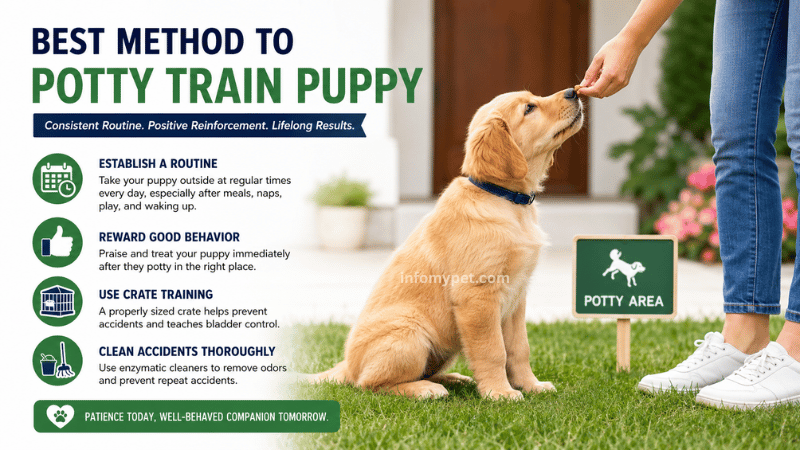
The Best Method to Potty Train Puppy
1. Establish a Consistent Bathroom Schedule
A consistent schedule is the foundation of successful potty training.
Puppies thrive on routine because it helps them predict what happens throughout the day. Taking your puppy outside at the same times every day encourages regular elimination habits.
Take your puppy to the designated potty area:
- Immediately after waking up
- After eating meals
- After drinking water
- After play sessions
- After naps
- Before bedtime
- Every one to two hours for young puppies
Following a predictable routine helps your puppy understand when bathroom opportunities occur, making accidents less likely.
2. Choose a Specific Potty Location
One of the best ways to speed up learning is to always use the same bathroom area.
The scent left behind from previous eliminations encourages the puppy to use that location again. Over time, the puppy begins associating that specific area with bathroom activities.
Choose a quiet outdoor location with minimal distractions. Avoid frequently changing potty spots because doing so may confuse the puppy and slow the learning process.
When bringing the puppy outside, walk directly to the designated area instead of allowing unrestricted exploration beforehand.
Use Positive Reinforcement
Positive reinforcement is widely regarded as the most effective and humane training method.
Whenever your puppy successfully eliminates in the correct location, immediately reward the behavior with:
- Verbal praise
- Petting
- Small training treats
- Playtime
The reward should occur within a few seconds of the desired behavior. This timing helps the puppy clearly understand which action earned the reward.
For example, when the puppy finishes urinating outside, calmly say phrases such as:
- "Good potty."
- "Good job."
- "Well done."
Follow the praise with a small treat.
Over time, the puppy associates outdoor elimination with positive outcomes and becomes more motivated to repeat the behavior.
Closely Supervise Your Puppy Indoors
Supervision is one of the most overlooked aspects of potty training.
Many accidents happen because puppies are given too much freedom before they fully understand house rules.
When your puppy is awake and active indoors:
- Keep the puppy within sight.
- Use baby gates if necessary.
- Attach a lightweight leash to your waist.
- Monitor behavior closely.
Watch for common signs that your puppy needs to go outside:
- Sniffing the floor
- Circling repeatedly
- Whining
- Restlessness
- Suddenly stopping play
- Moving toward corners
If you notice these signs, immediately take the puppy to the designated potty area.
Quick action can prevent accidents and reinforce proper bathroom habits.
Crate Training and Potty Training
Crate training is often considered one of the most effective tools for potty training.
Dogs naturally avoid soiling their sleeping areas whenever possible. A properly sized crate takes advantage of this instinct.
The crate should be:
- Large enough for the puppy to stand
- Large enough to turn around
- Large enough to lie comfortably
However, it should not be so large that one section becomes a bathroom area while another becomes a sleeping area.
Use the crate for:
- Overnight sleeping
- Short periods of unsupervised time
- Rest periods during the day
Always take the puppy outside immediately after leaving the crate.
The crate should never be used as punishment because doing so can create fear and anxiety.
Create a Feeding Schedule
Feeding schedules play a major role in successful potty training.
Puppies that eat at consistent times tend to eliminate at predictable times. This predictability allows owners to anticipate bathroom needs and reduce accidents.
Most young puppies benefit from:
- Three meals per day during early puppyhood
- Two meals per day as they mature
Avoid leaving food available throughout the day because free-feeding often results in unpredictable bathroom habits.
Providing meals at scheduled times creates a more structured routine that supports potty training success.
Manage Water Intake Responsibly
Fresh water should always be available throughout most of the day.
However, many veterinarians and trainers recommend limiting access to large amounts of water shortly before bedtime.
This practice may help reduce overnight accidents while still ensuring proper hydration.
Never restrict water excessively. Puppies require adequate hydration for healthy growth and development.
The goal is simply to manage timing rather than reduce overall water consumption.
How to Handle Accidents Properly
Accidents are a normal part of potty training.
Even puppies that are making excellent progress will occasionally have setbacks.
When accidents happen:
- Stay calm.
- Avoid yelling.
- Avoid physical punishment.
- Clean thoroughly.
- Continue the training routine.
Punishment can create fear and confusion. Instead of learning where to eliminate, the puppy may simply learn to hide when it needs to relieve itself.
A calm and consistent response leads to better long-term results.
Clean Accidents Thoroughly
Proper cleaning is extremely important.
Dogs possess a highly sensitive sense of smell. If odor remains in the area, the puppy may continue using the same location repeatedly.
Use an enzymatic cleaner specifically designed for pet accidents.
These cleaners break down odor-causing compounds at a molecular level, helping eliminate scent markers that attract future accidents.
Avoid using ammonia-based cleaners because urine naturally contains ammonia compounds, which may encourage repeat accidents.
Avoid Common Potty Training Mistakes
Many potty training problems result from preventable mistakes.
Inconsistent Schedules
Changing bathroom times daily creates confusion.
Consistency helps puppies understand expectations and develop reliable habits.
Giving Too Much Freedom Too Soon
Allowing unrestricted access to the entire house often leads to hidden accidents.
Gradually increase freedom only after the puppy consistently demonstrates reliable bathroom behavior.
Punishing Accidents
Punishment damages trust and often slows the learning process.
Positive reinforcement remains far more effective.
Missing Bathroom Opportunities
Skipping scheduled potty breaks increases the likelihood of accidents.
Regular outings are essential for success.
Expecting Immediate Results
Potty training takes time.
Every puppy learns at a different pace. Some puppies may achieve reliable house training within a few weeks, while others may require several months.
Nighttime Potty Training
Nighttime training requires additional patience.
Young puppies often cannot hold their bladder throughout the entire night.
To minimize accidents:
- Take the puppy outside before bedtime.
- Maintain a consistent sleep schedule.
- Use a crate.
- Set alarms if necessary for nighttime potty breaks.
As the puppy matures and bladder control improves, nighttime bathroom trips gradually become less frequent.
Most puppies eventually sleep through the night without needing to go outside.
Signs Your Puppy Is Becoming Fully Potty Trained
Several indicators suggest your puppy is making significant progress.
These include:
- Going several weeks without accidents
- Signaling when needing to go outside
- Waiting near the door
- Holding urine longer between breaks
- Consistently using the designated bathroom area
As these behaviors become more reliable, you can gradually provide additional freedom within the home.
Continue reinforcing successful behavior even after major progress has been achieved.
Potty Training Different Dog Breeds
Although the overall method remains the same, certain breeds may learn at different rates.
Small breeds such as Chihuahuas and Yorkshire Terriers often require more frequent bathroom breaks because of their smaller bladder capacity.
Working breeds such as German Shepherds and Labrador Retrievers may learn commands quickly due to their intelligence and eagerness to please.
Independent breeds may require additional patience and repetition.
Regardless of breed, consistency and positive reinforcement remain the most effective training tools.
What to Do If Potty Training Progress Stalls
Sometimes progress appears to stop unexpectedly.
If accidents suddenly increase:
- Review the training schedule.
- Increase supervision.
- Return to more frequent potty breaks.
- Reinforce successful behavior with rewards.
- Check for changes in routine.
If your puppy was previously reliable and suddenly begins having frequent accidents, consult a veterinarian.
Medical conditions such as urinary tract infections, digestive issues, or other health concerns may contribute to house-training difficulties.
Long-Term Benefits of Proper Potty Training
Investing time and effort into proper potty training provides benefits that last throughout the dog's life.
These benefits include:
| Benefit | Description |
|---|---|
| Cleaner Home | Fewer accidents and reduced odors |
| Better Hygiene | Improved sanitation for family members |
| Stronger Bond | Increased trust between owner and dog |
| Reduced Stress | Less frustration for everyone involved |
| Better Behavior | Improved obedience and self-control |
| Greater Freedom | More access to different areas of the home |
The habits developed during puppyhood often remain throughout adulthood, making early training one of the most valuable investments a dog owner can make.
Conclusion
The best method to potty train puppy involves consistency, patience, supervision, positive reinforcement, and a structured daily routine. Puppies learn most effectively when owners provide clear expectations and reward correct behavior immediately. Establishing a regular bathroom schedule, using a designated potty area, supervising closely, and incorporating crate training can significantly accelerate the learning process.
Accidents should be viewed as normal learning experiences rather than failures. By remaining calm, maintaining consistency, and focusing on positive reinforcement, most puppies can develop reliable bathroom habits within a few months. With dedication and persistence, your puppy will become a well-trained companion capable of maintaining proper house manners for years to come.
Frequently Asked Questions (FAQ)
At what age should I start using the best method to potty train puppy?
You should start potty training your puppy when you bring it home, typically between 8 and 12 weeks old. Early training helps establish clear routines and expectations quickly, ensuring your puppy develops good potty habits.
How long does it usually take to potty train a puppy effectively using the best method?
The duration of potty training can vary significantly depending on the breed, age, consistency of training, and the puppy's personality. Generally, it takes a few weeks to several months to fully potty train a puppy using crate training and positive reinforcement.
What if my puppy continues to have accidents indoors, despite using the best training methods?
Accidents occur frequently during the potty training phase. If they persist:
- Increase the frequency of potty breaks.
- Provide closer supervision.
- Thoroughly clean accidents with enzymatic cleaners to eliminate odors.
- Revisit your training schedule for consistency.
Is crate training cruel?
No, crate training is not cruel when done correctly. Puppies naturally seek a secure and safe space; a crate simulates this natural den-like environment. Be sure to introduce the crate positively and never use it as punishment.
Can older puppies or adult dogs benefit from the best method to potty train puppy?
Absolutely. Crate training and positive reinforcement can benefit older puppies and adult dogs significantly. While older dogs might require more patience and consistency, the method remains effective at any age.
What size crate should I choose for the best potty training results?
Select a crate that is just large enough for your puppy to stand up, turn around, and lie down comfortably. Avoid crates that are too spacious, as puppies may use one corner to eliminate, which defeats the purpose of the crate method.
How do I handle nighttime potty training?
Initially, puppies have limited bladder control, so set alarms to take them outside for potty breaks every few hours at night. Gradually increase the intervals as they mature and gain bladder control.
Can puppy pads be used along with crate training?
While puppy pads can be helpful, using them simultaneously with crate training may sometimes confuse your puppy. If you must use pads, separate the pad areas from sleeping and playing spaces, and gradually transition to outdoor potty breaks exclusively.
Should I limit my puppy’s water intake during potty training?
Never restrict water intake, as puppies require regular hydration to stay healthy. However, you can manage water availability strategically, such as limiting large amounts of water before bedtime, to reduce nighttime accidents.
How can I reinforce positive potty behavior most effectively?
Always reward immediately after successful potty breaks with verbal praise, treats, or playtime. Immediate positive reinforcement helps puppies quickly connect the act of pottying in the right place with positive outcomes.
References
- Give me your BEST potty training advice - reddit.com
- Potty Training a Puppy: How to House Train Puppies - akc.org
Disclaimer: The information shared on InfoMyPet is based on my personal experience in caring for my pets and is provided for general informational and entertainment purposes only.I am sharing my experiences, tips, and observations to help other pet owners, but the information on this blog should not be considered professional veterinary advice, diagnosis, treatment, or a substitute for consultation with a qualified veterinarian.Every pet is different, and what works for my pets may not be suitable for another pet. If your pet is sick, injured, showing unusual symptoms, or requires medical attention, please consult a qualified veterinarian for proper advice and treatment.InfoMyPet and its owner are not responsible for any loss, injury, or other consequences resulting from the use of information shared on this blog.By using this website, you acknowledge and agree that you use the information provided here at your own discretion and risk.


0 Comments