
Creating a pet friendly home is one of the most important responsibilities of every pet owner. Whether you own a dog, cat, rabbit, bird, or another companion animal, your home should provide a safe, comfortable, and enriching environment that supports your pet's physical and emotional well-being. Pets spend a significant amount of their lives indoors, making it essential for owners to carefully design their living spaces with their animals in mind.
A well-designed pet friendly home goes beyond simply providing food and water. It involves creating a secure environment that minimizes hazards, promotes healthy behavior, supports daily activities, and strengthens the bond between pets and their owners. When pets feel safe and comfortable in their surroundings, they are more likely to remain healthy, happy, and well-adjusted.
This guide explores practical strategies for creating a pet friendly home that accommodates the needs of both pets and humans. From selecting suitable furniture and flooring to organizing pet zones and improving home safety, these tips can help transform any living space into a welcoming environment for beloved animals.
Table of Contents
How to Create a Pet Friendly Home
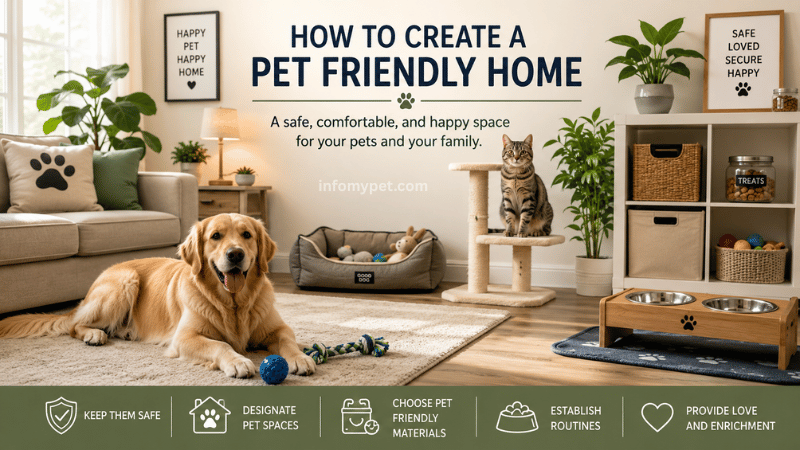
Understanding What Makes a Pet Friendly Home
A pet friendly home is designed to meet the unique needs of animals while maintaining comfort and functionality for human occupants. The goal is to create a balanced environment where pets can move freely, engage in natural behaviors, and remain protected from potential dangers.
Every pet species has specific requirements. Dogs require areas for exercise, social interaction, and rest. Cats need opportunities for climbing, scratching, and exploring elevated spaces. Small animals such as rabbits and guinea pigs need secure habitats and sufficient room to move around safely.
Understanding your pet's natural instincts and behaviors is the first step toward creating a truly pet friendly home. When the home environment aligns with these instincts, pets experience reduced stress levels and improved quality of life.
Prioritize Safety Throughout the Home
Safety should always be the foundation of a pet friendly home. Many common household items that appear harmless to humans can pose significant risks to animals.
Pet owners should carefully inspect every room and identify potential hazards. Electrical cords should be secured and hidden whenever possible, particularly for puppies, kittens, and small animals that may chew on them. Exposed wires can cause serious injuries, electrical burns, or even fatal accidents.
Cleaning products, medications, pesticides, and other chemicals should always be stored in locked cabinets or locations that pets cannot access. Even small amounts of certain substances can cause severe poisoning.
Sharp objects, breakable decorations, and small items that can be swallowed should also be kept out of reach. Regularly evaluating the home for potential hazards helps maintain a safer environment for pets.
Choose Pet-Friendly Flooring
Flooring plays a major role in maintaining a pet friendly home. Pets can place significant wear and tear on flooring materials through scratching, accidents, shedding, and daily movement.
Hardwood floors may be attractive, but they can be vulnerable to scratches caused by pet nails. Luxury vinyl flooring, tile, and laminate flooring often provide more durable and pet-friendly alternatives. These materials are generally easier to clean and more resistant to moisture damage.
Flooring Comparison for Pet Owners
| Flooring Type | Advantages | Disadvantages |
|---|---|---|
| Luxury Vinyl | Water-resistant, durable, easy to clean | May be less luxurious in appearance |
| Tile | Extremely durable and waterproof | Can feel cold underfoot |
| Laminate | Affordable and scratch-resistant | Vulnerable to excessive moisture |
| Hardwood | Attractive and valuable | Can scratch easily |
| Carpet | Comfortable and warm | Traps pet hair and odors |
Selecting the right flooring can significantly improve cleanliness, maintenance, and long-term durability in a pet friendly home.
Create Dedicated Pet Spaces
Every pet benefits from having a designated area where they can rest, relax, and feel secure. Dedicated pet spaces help establish routines and provide animals with a sense of ownership within the home.
Dogs often enjoy having a quiet corner equipped with a comfortable bed and favorite toys. Cats appreciate secluded resting spots, window perches, and elevated sleeping areas that allow them to observe their surroundings.
Providing dedicated spaces helps reduce anxiety and encourages positive behaviors. These areas should remain consistent and free from unnecessary disturbances.
A dedicated pet zone can also make household management easier by containing toys, feeding supplies, and bedding in one organized location.
Invest in Durable Furniture
Furniture selection is another important consideration when creating a pet friendly home. Pets naturally jump, scratch, shed, and occasionally have accidents, making furniture durability a priority.
Materials such as microfiber, leather, and tightly woven fabrics often perform better in homes with pets. These materials tend to resist stains, odors, and pet hair accumulation more effectively than delicate fabrics.
Furniture Materials for Pet Owners
| Material | Pros | Cons |
|---|---|---|
| Leather | Easy to clean and durable | Can be scratched by claws |
| Microfiber | Resists stains and hair buildup | May attract some odors over time |
| Canvas | Durable and washable | Can feel rough |
| Velvet | Attractive appearance | Collects pet hair easily |
| Silk | Luxurious look | Highly vulnerable to damage |
Furniture covers can provide additional protection while extending the lifespan of sofas and chairs.
Establish a Comfortable Feeding Area
A dedicated feeding station contributes significantly to a pet friendly home. Pets thrive on consistency, and a designated feeding area helps reinforce healthy routines.
Food and water bowls should be placed in a quiet location that is easily accessible. The area should be away from heavy foot traffic to minimize distractions during meals.
Using non-slip mats beneath bowls can help prevent spills and protect flooring from water damage. Elevated feeders may also benefit certain dogs by improving comfort during feeding.
Keeping feeding areas clean reduces the risk of bacteria growth and helps maintain a hygienic home environment.
Provide Mental Stimulation
Mental stimulation is essential for maintaining a pet's emotional health. A pet friendly home should offer opportunities for enrichment and engagement.
Dogs benefit from puzzle toys, treat-dispensing toys, training activities, and interactive games. These activities challenge their minds and help prevent boredom-related behaviors.
Cats require environmental enrichment that supports their hunting instincts. Interactive toys, climbing structures, scratching posts, and window viewing areas can provide valuable mental stimulation.
When pets remain mentally engaged, they are less likely to develop destructive habits such as chewing furniture, excessive barking, or scratching walls.
Create Vertical Spaces for Cats
Cats naturally seek elevated positions where they can observe their environment from a safe vantage point. Incorporating vertical spaces is one of the most effective ways to create a pet friendly home for feline companions.
Cat trees, shelves, window perches, and climbing systems provide opportunities for exercise and exploration. Vertical spaces also help increase usable territory within the home without occupying additional floor space.
These elevated areas allow cats to satisfy their natural instincts while reducing territorial conflicts in multi-cat households.
Providing a variety of heights and platforms can greatly enhance a cat's daily experience.
Maintain Proper Indoor Air Quality
Good indoor air quality benefits both pets and humans. Dust, allergens, smoke, and airborne pollutants can negatively affect respiratory health.
Regular vacuuming and cleaning help remove pet hair, dander, and dust particles. High-quality air purifiers may further improve air quality, especially in households with multiple pets.
Proper ventilation also plays an important role in reducing odors and maintaining a fresh indoor environment.
Pet owners should avoid using heavily scented products, candles, and air fresheners that may irritate sensitive animals.
Protect Pets from Toxic Plants
Many popular houseplants can be dangerous to pets if ingested. Creating a pet friendly home involves carefully selecting plants that are safe for animals.
Some plants can cause symptoms ranging from mild digestive upset to severe poisoning. Pet owners should research all indoor and outdoor plants before introducing them into the home.
Examples of Toxic and Safe Plants
| Toxic Plants | Pet-Safe Plants |
|---|---|
| Lilies | Spider Plant |
| Sago Palm | Areca Palm |
| Aloe Vera | Boston Fern |
| Dieffenbachia | Calathea |
| Philodendron | Parlor Palm |
Replacing toxic plants with pet-safe alternatives can significantly reduce health risks.
Organize Pet Supplies Efficiently
An organized home contributes to a more functional pet friendly home. Pet supplies can quickly accumulate and create clutter if not managed properly.
Storage bins, baskets, and cabinets can help organize food, treats, grooming supplies, toys, and cleaning products. Maintaining a dedicated storage system ensures essential items remain easily accessible.
Labeling storage containers can further improve organization and simplify daily routines.
An organized environment reduces stress for owners while creating a cleaner and more efficient living space.
Create Safe Outdoor Access
If your pet has access to outdoor areas, safety remains a top priority. Secure fencing can help prevent pets from escaping while protecting them from external dangers.
Outdoor spaces should be regularly inspected for toxic plants, sharp objects, and potential escape routes. Providing shaded areas and fresh water is essential, particularly during warm weather.
Outdoor enrichment opportunities such as digging zones, play equipment, and designated exploration areas can further enhance your pet's quality of life.
A safe outdoor environment complements the indoor features of a pet friendly home.
Develop a Cleaning Routine
Maintaining cleanliness is essential in households with pets. Regular cleaning helps control odors, allergens, and bacteria while preserving the appearance of the home.
Vacuuming carpets, washing pet bedding, cleaning food bowls, and sanitizing frequently used areas should become part of a consistent routine.
Cleaning Schedule for a Pet Friendly Home
| Task | Recommended Frequency |
|---|---|
| Vacuum Floors | 2–3 Times Weekly |
| Wash Pet Bedding | Weekly |
| Clean Food Bowls | Daily |
| Groom Pets | Weekly or as Needed |
| Deep Clean Floors | Monthly |
Consistent cleaning promotes a healthier environment for everyone in the household.
Consider Future Pet Needs
Creating a pet friendly home should involve planning for your pet's future needs. As pets age, their physical abilities and health requirements may change.
Senior dogs and cats may require orthopedic beds, ramps, non-slip flooring, and easier access to food and water stations. Planning ahead can reduce future modifications and improve long-term comfort.
Adapting the home to support aging pets demonstrates responsible pet ownership and helps maintain their quality of life.
Benefits of Having a Pet Friendly Home
A thoughtfully designed pet friendly home offers numerous benefits for both pets and owners.
| Benefits for Pets | Benefits for Owners |
|---|---|
| Reduced stress | Cleaner living environment |
| Improved safety | Easier home maintenance |
| Better physical health | Reduced property damage |
| Enhanced mental stimulation | Improved pet behavior |
| Greater comfort | Stronger human-animal bond |
These benefits highlight the importance of investing time and effort into creating a home environment that supports pet well-being.
Conclusion
Creating a pet friendly home involves much more than providing food and shelter. It requires thoughtful planning, attention to safety, and a commitment to meeting your pet's physical and emotional needs. By choosing durable materials, eliminating hazards, organizing dedicated pet spaces, and providing enrichment opportunities, pet owners can create an environment where animals thrive.
A well-designed pet friendly home supports healthier behaviors, improves safety, and enhances the relationship between pets and their families. Whether you are welcoming a new pet or improving your current living space, these practical strategies can help ensure your home remains comfortable, secure, and enjoyable for every member of the household.
Frequently Asked Questions (FAQs) About Creating a Pet Friendly Home
What is a pet friendly home?
A pet friendly home is a living environment that is designed to meet the safety, comfort, and well-being needs of pets. It includes features such as secure spaces, pet-safe furniture and flooring, proper storage for hazardous materials, designated feeding areas, and enrichment opportunities that help pets live healthy and happy lives.
Why is creating a pet friendly home important?
Creating a pet friendly home is important because it helps protect pets from accidents, injuries, and exposure to harmful substances. A well-designed environment also supports physical activity, mental stimulation, and emotional comfort, which can improve a pet's overall quality of life and behavior.
What type of flooring is best for a pet friendly home?
The best flooring for a pet friendly home is typically luxury vinyl, tile, or high-quality laminate. These materials are durable, easy to clean, resistant to scratches, and better able to withstand pet accidents compared to carpet or some types of hardwood flooring.
How can I make my home safer for pets?
You can make your home safer by securing electrical cords, storing chemicals and medications in locked cabinets, removing choking hazards, using pet-safe cleaning products, and ensuring that windows, balconies, and outdoor areas are secure. Regular inspections can help identify potential dangers before they become a problem.
Which houseplants are safe for pets?
Many pet-safe houseplants are available, including spider plants, Boston ferns, areca palms, calatheas, and parlor palms. Before bringing any plant into your home, it is important to verify that it is non-toxic to your specific type of pet.
How can I reduce pet odors in my home?
Pet odors can be minimized by maintaining a regular cleaning routine, washing pet bedding frequently, vacuuming floors and furniture, cleaning food and water bowls daily, and using air purifiers to improve indoor air quality. Proper grooming also helps reduce odors at their source.
Should pets have their own designated space in the home?
Yes. Providing pets with their own dedicated area helps them feel secure and comfortable. A designated space can include a bed, toys, food and water bowls, and a quiet environment where the pet can rest without interruptions.
How can I make my home more comfortable for cats?
Cats benefit from vertical spaces such as cat trees, shelves, and window perches. Providing scratching posts, hiding spots, interactive toys, and elevated resting areas allows cats to express their natural behaviors while remaining mentally stimulated.
What furniture materials work best in a pet friendly home?
Furniture made from leather, microfiber, or tightly woven fabrics is often a good choice for pet owners. These materials tend to be easier to clean and more resistant to pet hair, stains, and daily wear compared to delicate fabrics like silk or velvet.
How can I keep a pet friendly home organized?
Using storage bins, baskets, cabinets, and shelving systems can help keep pet supplies organized. Designating specific storage areas for food, toys, grooming tools, treats, and cleaning products makes daily pet care more efficient while reducing clutter.
How often should I clean a pet friendly home?
Daily cleaning of food and water bowls is recommended, while vacuuming should be done several times per week depending on shedding levels. Pet bedding should be washed weekly, and deep cleaning of floors and pet areas should be performed regularly to maintain hygiene.
Can a pet friendly home benefit pet owners as well?
Yes. A pet friendly home can make pet care easier, reduce property damage, improve cleanliness, and create a more harmonious living environment. It can also strengthen the bond between pets and their owners by ensuring that pets feel safe, comfortable, and well cared for.
References
- Pet-Friendly Home Design Tips | Safe & Fun Space for Pets - parkwoodanimalhospital.com
- 120 Best Pet Friendly Ideas | home, house design, dog rooms - pinterest.com/dagdesigns
Disclaimer: The information shared on InfoMyPet is based on my personal experience in caring for my pets and is provided for general informational and entertainment purposes only.I am sharing my experiences, tips, and observations to help other pet owners, but the information on this blog should not be considered professional veterinary advice, diagnosis, treatment, or a substitute for consultation with a qualified veterinarian.Every pet is different, and what works for my pets may not be suitable for another pet. If your pet is sick, injured, showing unusual symptoms, or requires medical attention, please consult a qualified veterinarian for proper advice and treatment.InfoMyPet and its owner are not responsible for any loss, injury, or other consequences resulting from the use of information shared on this blog.By using this website, you acknowledge and agree that you use the information provided here at your own discretion and risk.




0 Comments